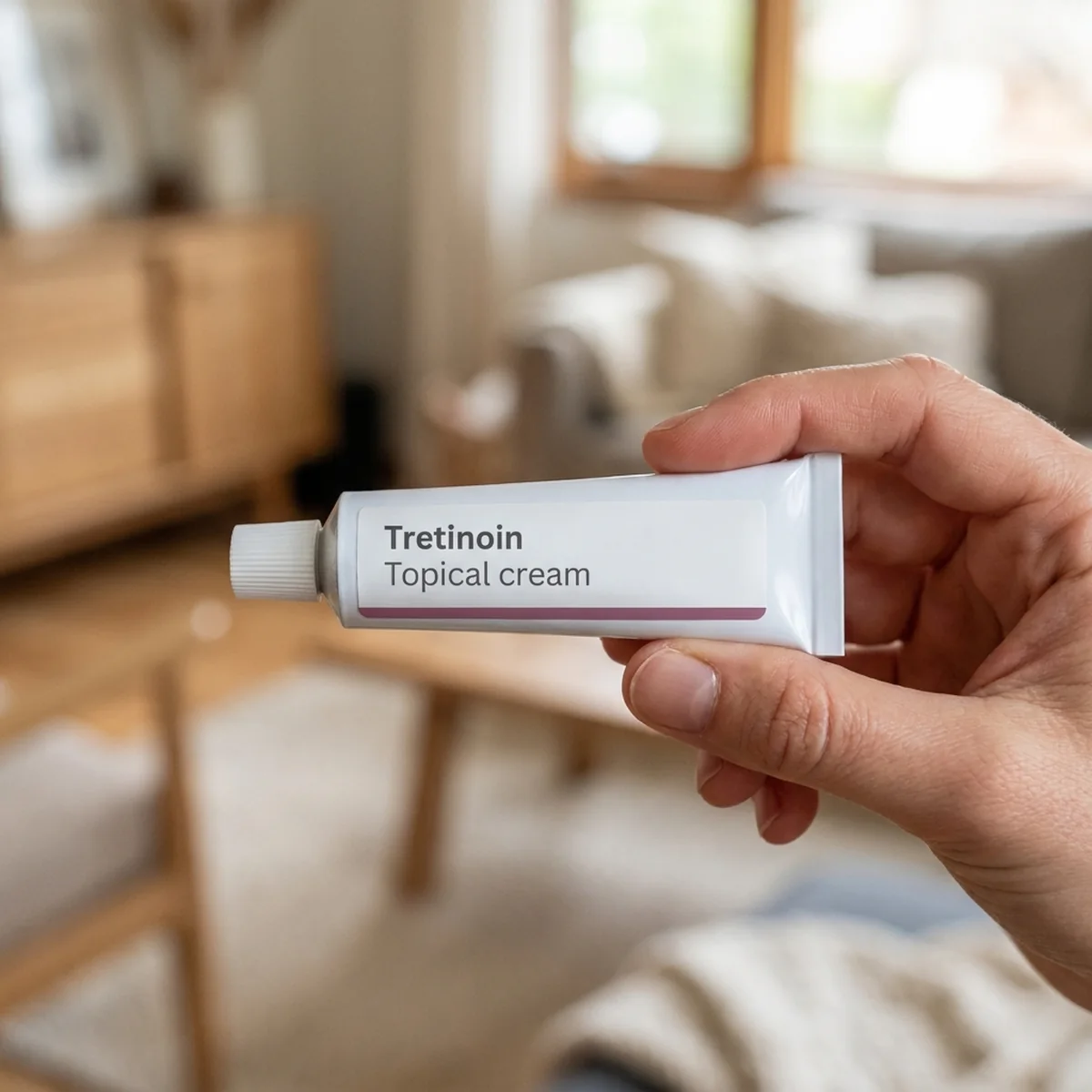
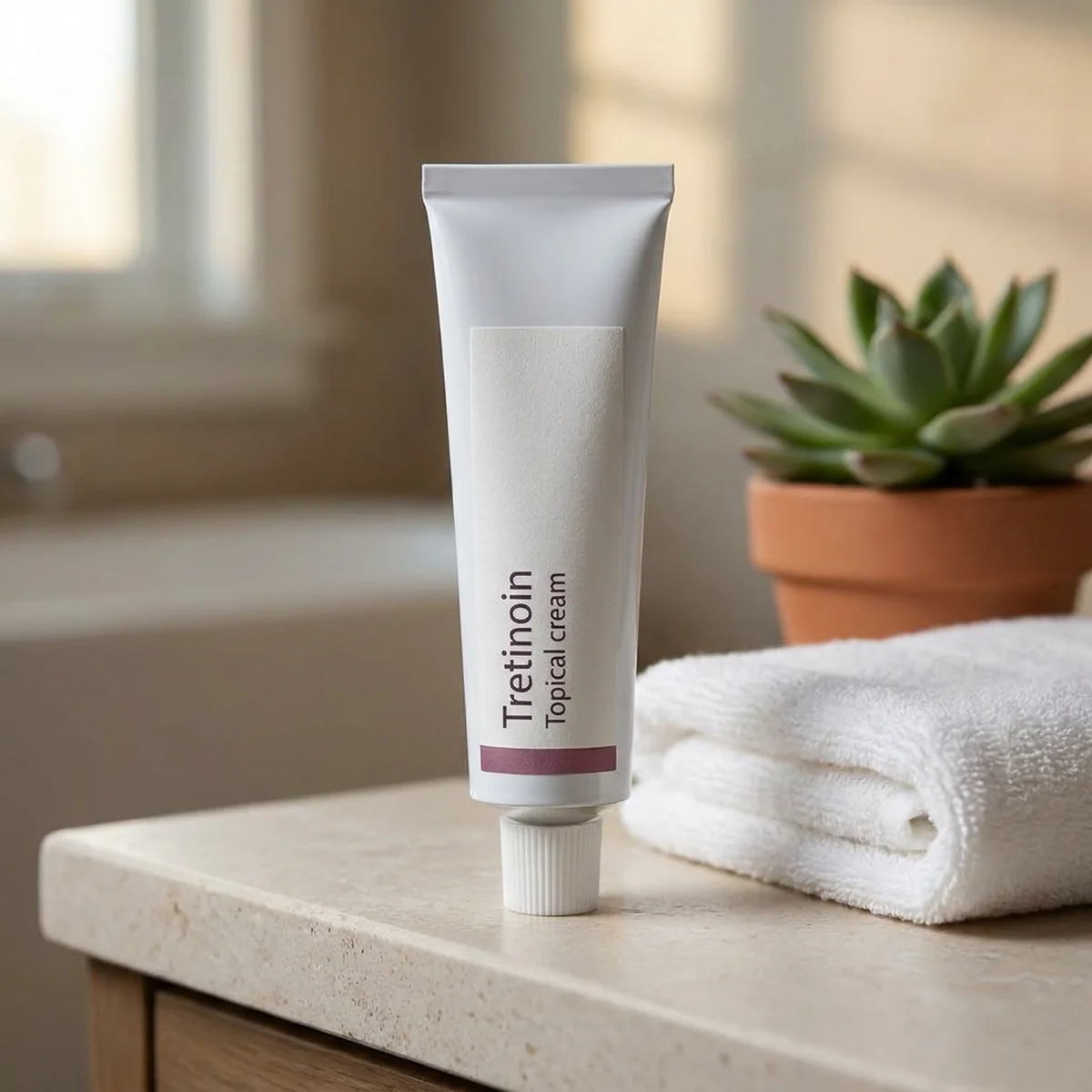
Made for you by a licensed pharmacy
Tretinoin prepared by a licensed 503A compounding pharmacy after a provider's review.
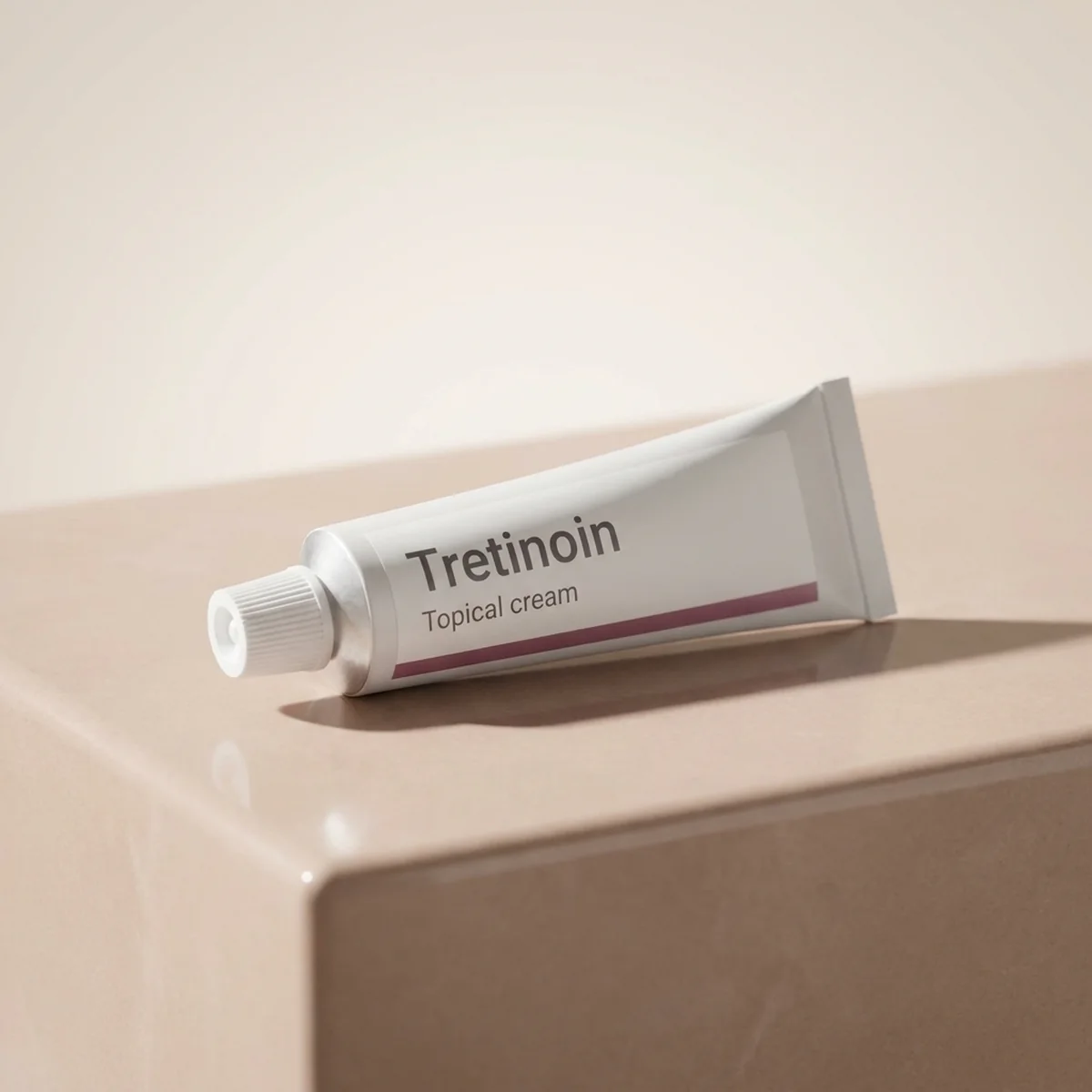
RxSkin care
Tretinoin, prescribed by a licensed provider.
Compounded tretinoin cream, and tretinoin with niacinamide, available after a licensed provider reviews your health intake. Your provider chooses the strength. A licensed 503A compounding pharmacy prepares your order and ships it free. Approval is not guaranteed.
How would you like to pay?
Choose your plan
Prescription treatment requires an online medical evaluation. A provider decides whether treatment is appropriate; approval is not guaranteed.
Compounded tretinoin cream, and compounded tretinoin with niacinamide, after a licensed provider's review. Your provider chooses the strength. A licensed 503A compounding pharmacy prepares your order and ships it free.
Tretinoin cream paid once: $169 for 1 month, $456 for 3 months, $862 for 6 months or $1,622 for 12 months. With auto-refill each is 10% off: $152, $410, $775 and $1,459 ($121.58 a month on the 12-month plan). Tretinoin with niacinamide paid once: $149, $402, $760 and $1,430; with auto-refill $134, $361, $684 and $1,287 ($107.25 a month on the 12-month plan). Shipping is free, and the exact total is shown before you pay.
Yes. You complete an online health intake and a licensed provider decides whether tretinoin is right for you and chooses the strength. Choosing a plan does not guarantee a prescription.
Tretinoin cream is an FDA-approved drug. Drugs@FDA lists Retin-A tretinoin 0.1% cream with an original approval action dated 01/26/1973, 0.05% cream 07/19/1974 and 0.025% cream 09/16/1988. The creams sold here are compounded by a licensed 503A pharmacy. FDA says compounded drugs are not FDA-approved, meaning FDA does not verify their safety, effectiveness or quality before they are marketed. The label and trial results on this site come from approved products.

The evidence, in plain view
The labels, the trials and the FDA's own pages on compounding are linked on this page. Read what they measured, what they did not, and how compounded creams differ from approved ones, before you decide.
Why us
Tretinoin prepared by a licensed 503A compounding pharmacy after a provider's review.
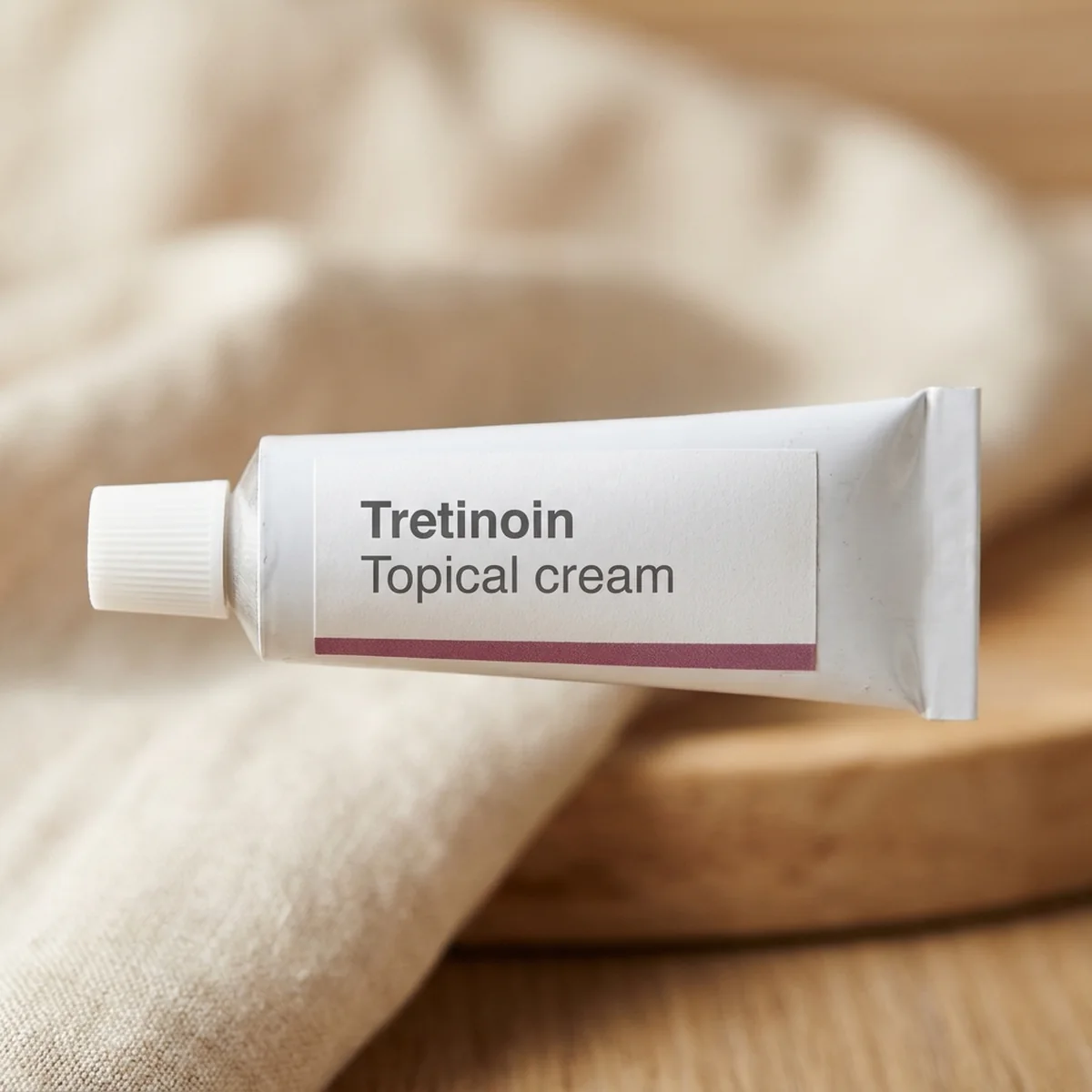
The labels and trials measured acne lesions, signs of photodamage and irritation. We link each source and say what it did not show.
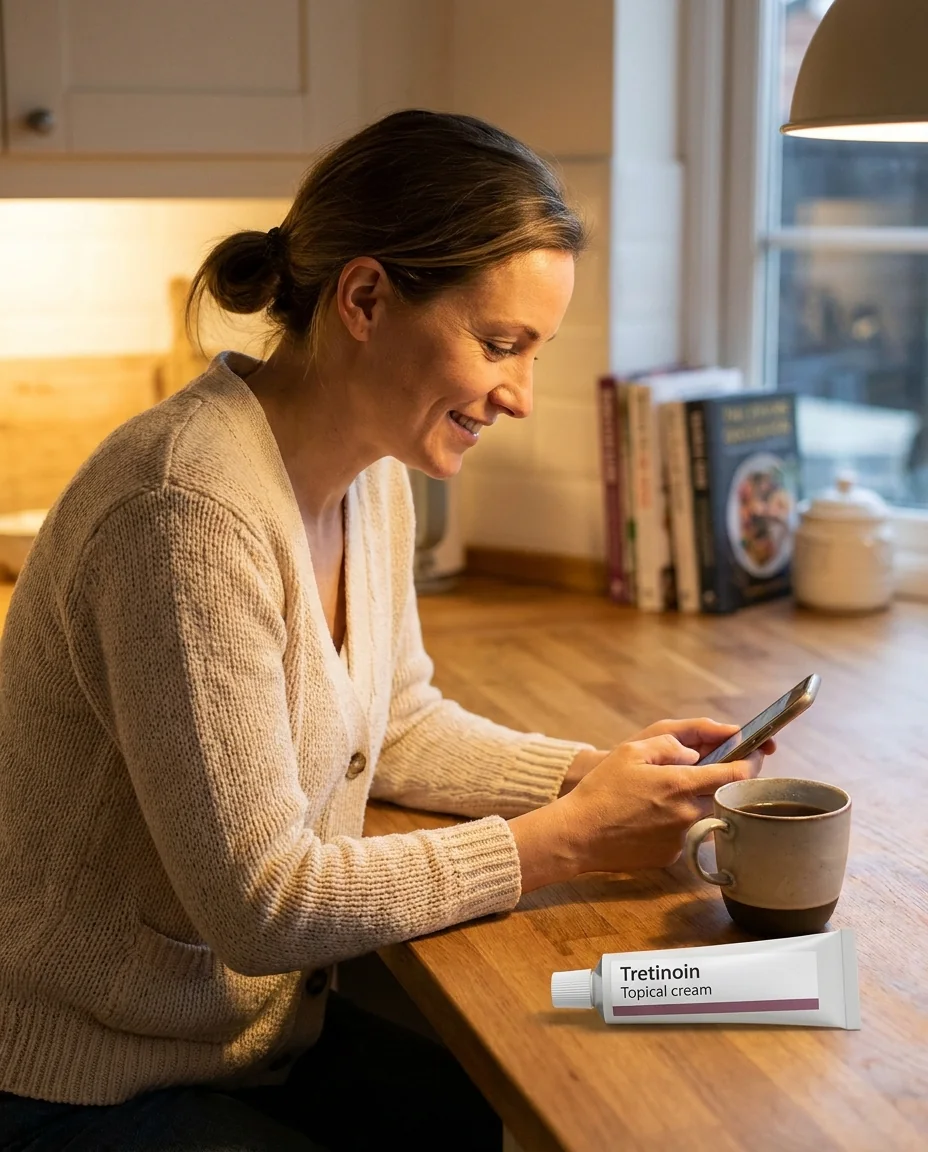
A licensed provider reviews your order and chooses the strength, with no office visit.
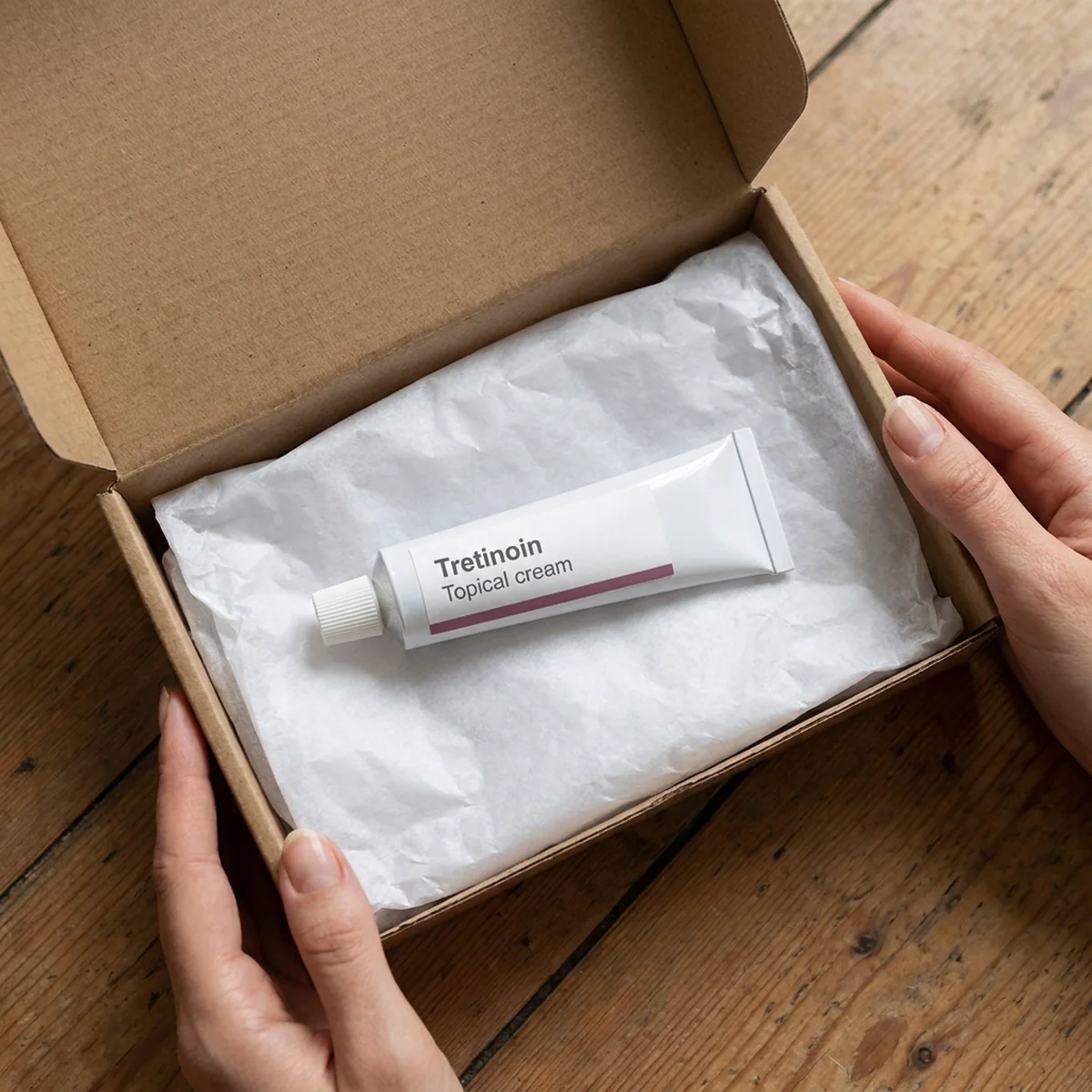
Tretinoin from $121/mo on the 12-month plan with auto-refill. One-time is $135/mo. Shipping is free.
How we compare
| Feature | Tretinoin Rx | Unregulated online sellers | In-person clinic |
|---|---|---|---|
| Licensed provider reviews your order | × | ||
| Provider chooses your strength | × | ||
| Made by a licensed 503A pharmacy | × | Varies | |
| No office visit | × | ||
| Price shown before you pay | Varies | ||
| Free shipping | Varies | n/a |
How it works
Pick tretinoin or tretinoin with niacinamide, then 1, 3, 6 or 12 months. Auto-refill takes 10% off each plan.
Answer a private online questionnaire. A licensed provider reviews it and chooses the strength.
If prescribed, the pharmacy prepares your order and ships it to you free.
Tretinoin, also called all-trans-retinoic acid, is a topical retinoid. The Retin-A label says its cream is indicated for the treatment of acne vulgaris. The Renova 0.02% label says it is an adjunct for the mitigation of fine facial wrinkles, and that it does not eliminate wrinkles, repair sun-damaged skin, reverse photoaging, or restore more youthful skin. The creams sold here are compounded. The FDA says compounded drugs are not FDA-approved, meaning it does not verify their safety, effectiveness or quality before they are marketed, and the label and trial results on this page come from approved products.
Prepared for you by a licensed pharmacy, after a provider review.
Why people choose it
Each card links to the original study, with a tag for the kind of evidence behind it.
The Retin-A label says the cream is indicated for topical application in the treatment of acne vulgaris. It says therapeutic results should be noticed after 2 to 3 weeks but more than 6 weeks of therapy may be required before definite beneficial effects are seen.
Read the study Approved labelThe Renova 0.02% label says it is indicated as an adjunctive agent for the mitigation (palliation) of fine facial wrinkles, that up to 6 months of therapy may be required, and that it does not eliminate wrinkles, repair sun-damaged skin, reverse photoaging, or restore more youthful or younger skin.
Read the study Controlled human trialIn a 24-week, double-blind, randomized, multicenter study of 296 subjects with photodamaged facial skin, tretinoin emollient cream 0.05% gave a significantly better global response than vehicle, with 68% of subjects improved compared with 43% in the vehicle group.
Read the study Approved labelThe Renova 0.02% label says almost all patients reported one or more local reactions such as peeling, dry skin, burning, stinging, erythema, and pruritus, and that skin irritation that was severe, led to temporary discontinuation, or led to use of a mild topical corticosteroid was reported in 32% of all study patients.
Read the studyThe honest version
Trials measured acne lesions and signs of photodamage, and also irritation. Here is what the sources say.
See every study we trackA Cochrane review reports that eight trials showed topical tretinoin cream in concentrations of 0.02% or higher was superior to placebo for mild to severe photodamage on the face and forearms, although losses to follow-up were relatively high in most studies. It concludes that erythema, scaling/dryness, burning/stinging and irritation may be experienced initially.
SourceA systematic review of topical retinoids in acne vulgaris reports no significant difference in efficacy between tretinoin and tazarotene, and that tretinoin 0.05% resulted in 62% of patients experiencing adverse events compared with adapalene 0.1% (19%) and adapalene 0.3% (40%).
SourceA systematic review of topical tretinoin for photoaging lists as limitations that different tretinoin formulas, different outcome parameters, and limited recent studies cause lack of uniformity in the evidences.
SourceIn the Veterans Affairs Topical Tretinoin Chemoprevention Trial, 1,131 patients were randomized to topical 0.1% tretinoin or a matching vehicle control for 1.5-5.5 years. The authors concluded that high-dose topical tretinoin is ineffective at reducing risk of keratinocyte carcinomas in high-risk patients.
SourceA mortality analysis of the same Veterans Affairs randomized trial of topical tretinoin reports the intervention was terminated 6 months early because of an excessive number of deaths in the tretinoin-treated group. Its authors wrote that they observed an association of topical tretinoin therapy with death but do not infer a causal association that current evidence suggests is unlikely.
SourceThe FDA says compounded drugs are not FDA-approved, meaning FDA does not verify the safety, effectiveness or quality of compounded drugs before they are marketed.
SourceShop Tretinoin Rx
These are the products a licensed provider can prescribe here, made by a compounding pharmacy and shipped free.
Topical cream
Compounded cream · strength chosen by your provider · 10% off with auto-refill
From $121/mo
Topical cream
Compounded cream with niacinamide 4% and hyaluronic acid · 10% off with auto-refill
From $107/mo
Free resources
Free, with no sign-up.
Research library
The irritation and side effects that tretinoin labels, trials and reviews report, with each product and study length named.
Research GuidesThe sources here do not test tretinoin, niacinamide and hyaluronic acid as one product; findings come from separate studies of other products.
FAQ
The things people ask most before starting Tretinoin cream.
Compounded tretinoin cream, and compounded tretinoin with niacinamide, after a licensed provider's review. Your provider chooses the strength. A licensed 503A compounding pharmacy prepares your order and ships it free.
Tretinoin cream paid once: $169 for 1 month, $456 for 3 months, $862 for 6 months or $1,622 for 12 months. With auto-refill each is 10% off: $152, $410, $775 and $1,459 ($121.58 a month on the 12-month plan). Tretinoin with niacinamide paid once: $149, $402, $760 and $1,430; with auto-refill $134, $361, $684 and $1,287 ($107.25 a month on the 12-month plan). Shipping is free, and the exact total is shown before you pay.
Yes. You complete an online health intake and a licensed provider decides whether tretinoin is right for you and chooses the strength. Choosing a plan does not guarantee a prescription.
Tretinoin cream is an FDA-approved drug. Drugs@FDA lists Retin-A tretinoin 0.1% cream with an original approval action dated 01/26/1973, 0.05% cream 07/19/1974 and 0.025% cream 09/16/1988. The creams sold here are compounded by a licensed 503A pharmacy. FDA says compounded drugs are not FDA-approved, meaning FDA does not verify their safety, effectiveness or quality before they are marketed. The label and trial results on this site come from approved products.
Your provider chooses the strength: 0.025%, 0.05% or 0.1%. In one double-blind photoaging trial, both 0.1% and 0.025% tretinoin produced statistically significant overall improvement compared with vehicle, with no clinically or statistically significant differences in efficacy between the two concentrations, while irritant side effects (erythema and scaling) were statistically significantly greater with 0.1%.
The Retin-A label says therapeutic results should be noticed after 2 to 3 weeks but more than 6 weeks of therapy may be required before definite beneficial effects are seen. The Renova 0.02% label says up to 6 months of therapy may be required before the effects on fine facial wrinkling are seen. The Retin-A label also says that during the early weeks of therapy an apparent exacerbation of inflammatory lesions may occur, and that this should not be considered a reason to discontinue therapy.
The Retin-A label says topical use may induce severe local erythema and peeling, and that the skin of certain sensitive individuals may become excessively red, edematous, blistered, or crusted. The Renova 0.02% label says almost all patients reported one or more local reactions such as peeling, dry skin, burning, stinging, erythema, and pruritus. Your provider explains what applies to you.
The Retin-A label says exposure to sunlight, including sunlamps, should be minimized during use, and that patients with sunburn should not use the product until fully recovered. The Renova 0.02% label says patients should be warned to use sunscreens (minimum SPF of 15) and protective clothing.
The Renova 0.02% label says there are no adequate and well-controlled studies in pregnant women and that it should not be used during pregnancy. A generic tretinoin cream 0.05% label says it should be used during pregnancy only if the potential benefit justifies the potential risk, and that it is not known whether the drug is excreted in human milk. The Retin-A patient instructions say that if you are pregnant, think you are pregnant, or are nursing a baby, consult your physician before using the medication.
The sources used here do not test the combined cream. They include separate studies of niacinamide on its own or in a moisturizer, for example a trial of 4% nicotinamide gel against 1% clindamycin gel for acne. See the guide on tretinoin and niacinamide for what each study measured and the company ties its abstract discloses.
The FDA says section 503A of the FD&C Act applies to human drug compounding by a licensed pharmacist within a state-licensed pharmacy or federal facility, or by a licensed physician, that is not registered with FDA as an outsourcing facility. One of the section 503A conditions is that the drugs must be compounded based on the receipt of valid patient-specific prescriptions. FDA also says compounded drugs are not FDA-approved.
No. You can pay once for 1, 3, 6 or 12 months, or turn on auto-refill and take 10% off. You can change or cancel refills anytime.
Plans from $121/mo with auto-refill. Shipping included.
Choose your plan